The Holland Tunnel and Pulaski Skyway Commute: Jersey City's Old Arteries
Two structures from the early automobile age still carry much of Jersey City's traffic toward Manhattan and Newark every day.
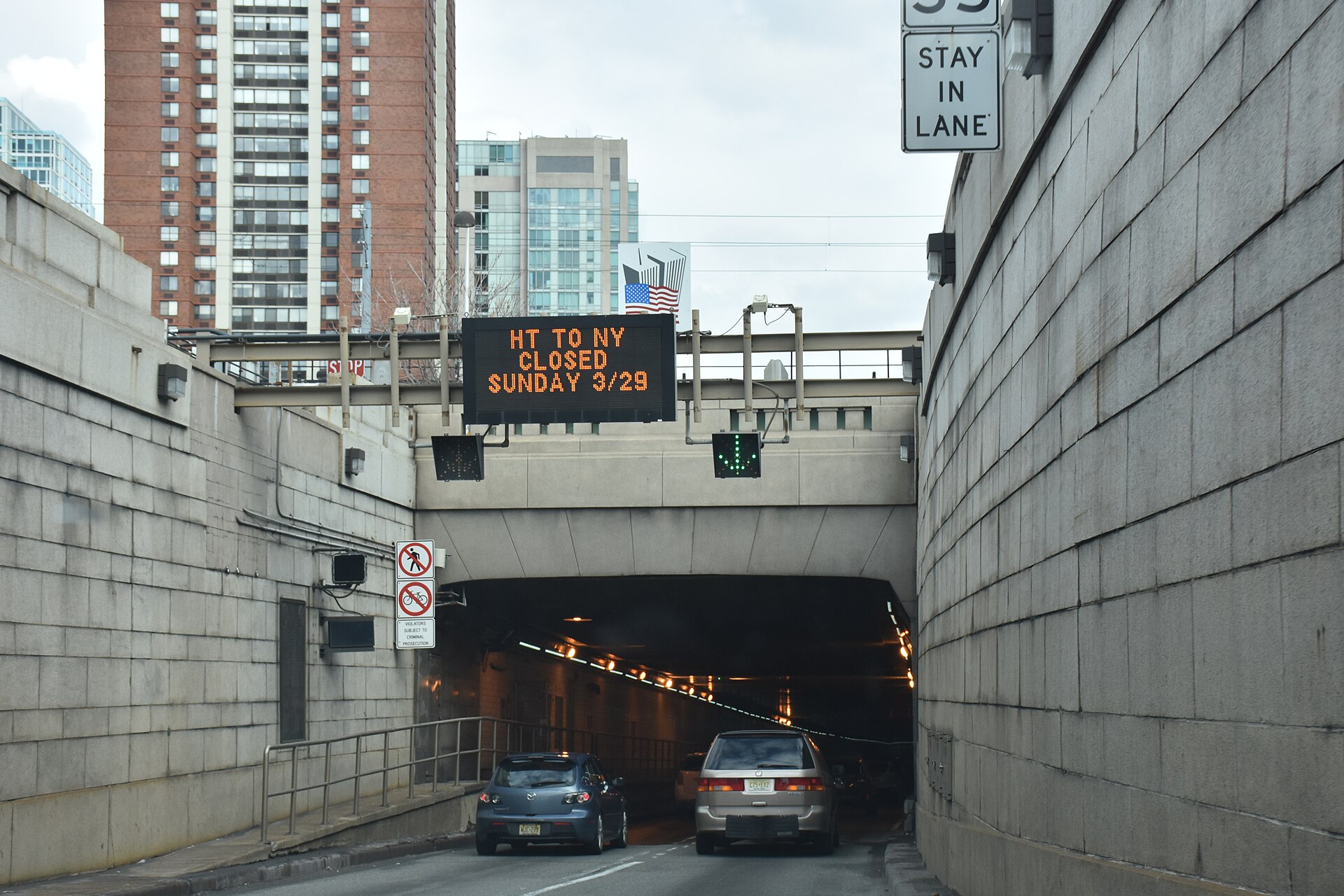
Jersey City's commute to Manhattan runs, for many drivers, through the Holland Tunnel. Opened in 1927 as the first mechanically ventilated underwater vehicular tunnel, it connects Canal Street in Manhattan with the tunnel plaza in Jersey City, carrying Interstate 78 traffic under the Hudson River. The Port Authority of New York and New Jersey operates the crossing.
The approaches matter as much as the tubes themselves. Traffic funnels through the local street grid near the plaza and along the elevated roadways that feed the tunnel, which is why a disruption in lower Manhattan or at the plaza can back up quickly into Jersey City neighborhoods. Drivers who know alternate routes to the Lincoln Tunnel or who can switch to PATH on heavy days have the most flexibility.
To the south and west, the Pulaski Skyway carries U.S. Routes 1 and 9 over the Hackensack and Passaic rivers between Jersey City and Newark. The elevated steel structure, opened in the early 1930s, remains a workhorse for drivers heading toward Newark, the airport area and points south, and its ramps connect with the Tonnele Avenue corridor and the New Jersey Turnpike extension.
Both structures require constant maintenance because of their age and traffic volume, and lane closures for that work are a recurring feature of overnight and weekend travel. Before a late trip, check current Port Authority and New Jersey Department of Transportation advisories for the tunnel and the Skyway rather than assuming the usual pattern of open lanes will hold.
For daily commuters, the durable advice is simple. Leave a time cushion on mornings when weather, a crash or construction can compound delays, keep a transit alternative in mind for the worst days, and remember that these crossings were built for a fraction of today's traffic. They still do the job, but they do it best when drivers plan around their limits.